SOCIOSE
No military justification: Kyiv hit by Iskander cluster strike as civilians pay the price
Legal experts warn that area-effect weapons in dense urban warfare test international norms; critics allege Moscow aims to intimidate civilians while allies wrestle with delayed air defenses and commitment.
Kyiv woke to another day of broken glass and body counts after one of the most intense overnight assaults on the capital in months, a three-wave barrage of Russian ballistic missiles that officials say carried cluster warheads. Ukrainian authorities confirmed two people were killed and at least several more wounded, as fragments slammed into residential streets, power facilities, and infrastructure sites scattered across the city. The attacks reignited debates about whether Moscow is deliberately escalating risks to civilians and testing the limits of international tolerance.
In his morning address, President Volodymyr Zelenskyy accused Russia of using 21 ballistic missiles against Kyiv since the previous evening, sarcastically referring to Russian forces as “humanitarians.” Ukrainian officials said the strike pattern suggested an intent to overwhelm air defenses and saturate densely populated neighborhoods rather than precisely target military assets. Emergency crews worked through the night amid burning cars and shattered apartment blocks, while investigators began cataloging remnants of what they identified as Iskander-class missiles.
The most contested strike hit Kyiv’s historic center, where Zelenskyy said an Iskander ballistic missile carrying a cluster warhead was used, later calling it a deliberate attempt to maximize civilian casualties. According to his account, the weapon released 58 submunitions that exploded over a 400-by-400-meter area, a footprint large enough to blanket several city blocks with lethal fragments. “This strike had no military justification,” he asserted, arguing that its design and timing violated not only battlefield norms but the basic premise that civilian life should be spared where possible.
Independent military analysts broadly agree that the choice of weaponry matters as much as the choice of target, and cluster warheads are built to multiply harm. Fired from long range, ballistic missiles like the Iskander arc high above the city and then release submunitions that burst in mid-air, sending metal shrapnel downward over playgrounds, roofs, and cars alike. As images of pockmarked pavements and shredded façades circulated, questions intensified about who in Moscow signed off on tactics that, by design, make civilian casualties statistically inevitable.
Witnesses described a hierarchy of risk in which ordinary residents were never consulted but bore the brunt of choices made far above them. Windows blown out in kindergarten classrooms and charred tram stops became visual shorthand for a war now defined by attrition and psychological pressure as much as territorial gains. “Every new crater is a message about who gets to feel safe and who does not,” said a Kyiv-based sociologist, arguing that the assault was as much about control as conquest.
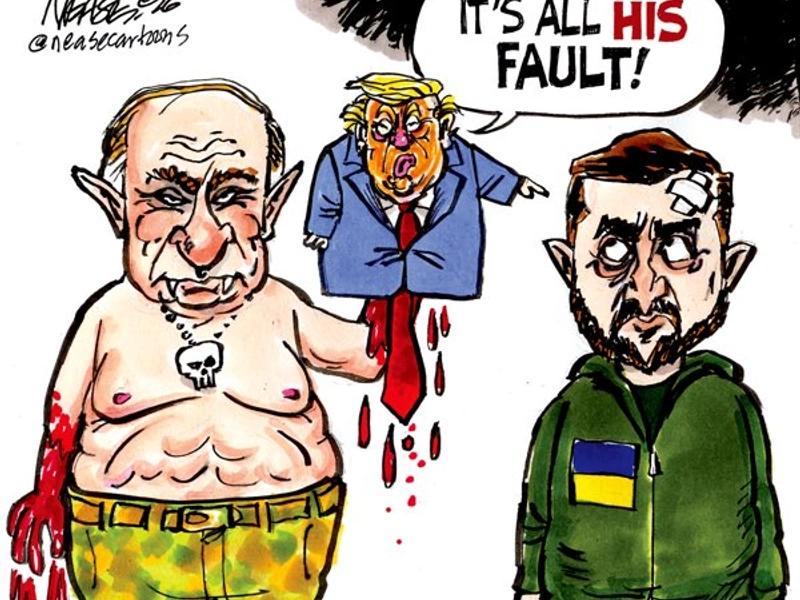
Across Ukrainian and Western social media, outrage over the use of cluster warheads blurred quickly into broader political arguments. Supporters of Ukraine accused Western politicians of enabling impunity by delaying air defense deliveries or equivocating about long-term security guarantees. Some users directly linked the attack to U.S. political dynamics, arguing that mixed signals from figures like Donald Trump only embolden Moscow by suggesting future sanctions relief or weaker backing for Kyiv.
Russian officials, by contrast, portrayed the overnight assault as a legitimate response to what they call “terrorist attacks” on Russian territory and occupied areas. State media outlets claimed, without substantiating evidence, that the missiles were aimed at military command centers and Western-supplied equipment hidden inside urban zones. They also accused Ukraine and its allies of manipulating casualty figures and battlefield imagery to fuel “Russophobia” and justify further arms deliveries. The Kremlin insists that any civilian deaths are tragic but unavoidable side effects of war.
International legal experts say those arguments are unlikely to withstand scrutiny if detailed targeting data ever becomes public. Under humanitarian law, they note, commanders must choose means and methods of warfare that minimize harm to civilians, even when fighting in cities where forces are intermingled. “When you select area-effect weapons for a dense urban environment, you are making a probabilistic decision about civilian deaths,” said one war-crimes researcher, calling it “a choice, not an accident.”
"When you select area-effect weapons for a dense urban environment, you are making a probabilistic decision about civilian deaths." - war-crimes researcher
For Kyiv’s allies, the attack is already feeding a reappraisal of what deterrence looks like when one side repeatedly crosses red lines without immediate consequence. Some European diplomats argue that more robust air defenses and clearer pledges of long-term support are necessary precisely because legal mechanisms move slowly and Russia appears undeterred by condemnation alone. Others worry that openly framing strikes like this as war crimes, without a path to enforcement, risks normalizing a gap between rhetoric and reality that corrodes public trust.
The result is a growing sense of disillusionment among many Ukrainians, who see their city turned into a laboratory for modern warfare while foreign capitals debate escalation theory. Residents interviewed near the blast sites spoke of feeling both fiercely defiant and increasingly skeptical that international institutions can protect them from the next night of sirens. With each new crater mapped and each fragment bagged as potential evidence, Kyiv’s latest trauma deepens a larger question: how long the world will tolerate a war where the boundaries of acceptable risk keep moving outward.